
Hope in the classroom: teachers writing Europe’s next chapter
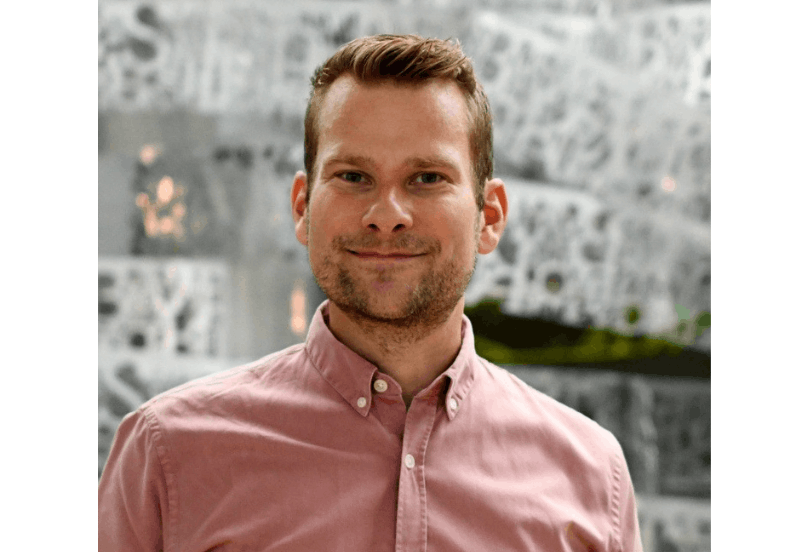
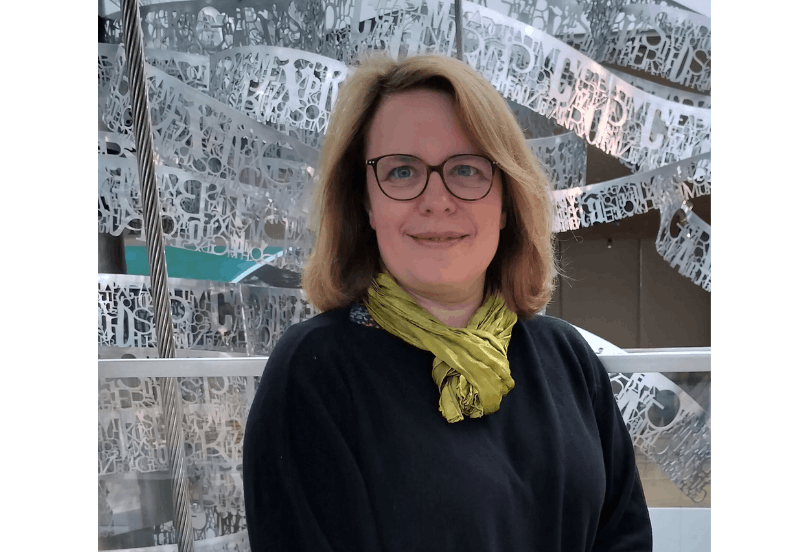
Laurence and Guido from the museum’s learning team explain the collective writing process behind the ‘Hope Manifesto’.
The Hope Manifesto was launched on 27 May 2026 at the EuroClio 32nd Annual Conference: History and Hope – Learning for Change co-organised with the House of European History. It can be downloaded on this webpage.
The interview below was conducted by Missions Publiques – a European organisation specialising in citizen-led deliberative processes. Missions Publiques were engaged to design and facilitate a participatory process during the EuroClio Annual Conference 2026, enabling teachers to co-write the “Hope Manifesto” collective text. This process is co-created in close collaboration with the Learning team of the House of European History, ensuring its pedagogical grounding and alignment with the conference’s educational objectives.
Missions Publiques (MP): Why did the House of European History choose this moment to launch the Hope Manifesto initiative as part of the conference?
Guido: Three years ago we began a large-scale evaluation working with 1,000 teachers to identify what was missing in their daily practice – whether it was learning gaps, a lack of materials, or shortcomings in their curriculum. Once we had identified the key learning needs, we started developing a digital toolbox with resources teachers can use directly in the classroom. It also became clear that a community was forming around this work. Teachers wanted to stay connected, contribute their thinking, and collaborate more closely with us. That is what led us to organise a large conference where they could meet, share best practices, and explore new approaches to support their teaching in the years ahead. Within this conference, the Hope Manifesto is a tool for collective reflection – something teachers can take forward and integrate into their practice over the coming years.
Laurence: One of the outcomes from the evaluation report was that, when we asked teachers what worked best to address topics like European History, European integration, the role of memory, or multiperspectivity (all central to what we do at the House of European History), one of the most effective approaches was what we might call “positive history”. This does not mean avoiding difficult history. It means tackling it through a constructive lens – one of empathy, solidarity, personal diaries, and individual stories.
MP: What do you find most exciting, and perhaps also most sensitive, about working on hope in Europe today?
Laurence: Presenting “positive history” is not about superficial optimism; it is about giving people a sense of agency. It also creates shared language and a common way of engaging younger generations, empowering them to take action, stay in the game, and remain engaged as citizens and as agents of change. We have our own evaluation framework, but we can also connect it with the kind of argument developed by Rutger Bregman: when we constantly predict catastrophe, we risk reinforcing hopelessness and disengagement. This is the case, for instance, with climate change. By contrast, when we highlight credible pathways for change, our potential for impact grows. For teachers, the ripple effect is especially significant. A history teacher who attends this conference or reads the Hope Manifesto may work with 100 to 150 students every year and may have decades of teaching ahead of them. That is an enormous reach.
Guido: We live in a somewhat cynical and polarised world today. I see hope as something that can work against this. Concretely, as we built the programme for the conference, we looked at how to bring a sense of hopefulness into every element: the speakers, the keynotes, the workshops almost as medicine against cynicism and polarisation.
MP: Your conference programme is very ambitious in addressing complex topics, especially in teaching and history. How did you build the programme, and how did you integrate these different dimensions?
Guido: We selected speakers and keynote contributors whom we felt could really bring this “medicine of hope” to the forefront. For the workshops, we collaborated with EuroClio and launched a call for contributions with a clear framework, inviting teachers, organisations, and other actors who also see hope as a useful approach. This made it a genuinely bottom-up process: we did not simply dictate the programme. In total, we have around 40 workshops, forming a diverse set of contributions aligned with the pillars we defined. For example, there is a strong focus on anti-racism, which is one of the programme’s key pillars, as well as on democracy and citizenship values.
Laurence: The themes are centred around multiperspectivity, democracy and European values as well as anti-racism particularly as we are opening a temporary exhibition (“Postcolonial?”), which is part of the programme. These themes are also reflected in HistoriCall, the House of European History’s digital learning platform, which provides ready-to-use resources for teachers across Europe in 24 languages. Within this framework, we are launching two new modules at the time of the conference: “What is Racism?” and “Trust or Trash”, focusing respectively on anti-racism and media literacy. Across the four days, these themes are woven into a broader learning journey. We have also included a cultural programme, as the event takes place in Brussels and many teachers are coming from abroad. It offers them a valuable opportunity to better understand the Belgian context, to discover other museums in Brussels, and visit a range of schools.
That hidden gem, the passion of teachers, is what we are trying to bring to the foreground.
MP: Why was co-creation such an important part of the Hope Manifesto from the outset?
Guido: We learned from experience that the most useful things we can offer are: first, teaching materials they can use directly; second, a conference where they can share best practices; and third, a manifesto. It would be neither appropriate nor reasonable for us to presume that we are best placed to determine the content of such a manifesto, over the three days of the conference, we are giving teachers the agency and the platform to shape it collectively: to identify what matters most to them. Our role is then to facilitate and connect: to help bring this manifesto forward and ensure it reaches the right people. We invited a member of the Commission, and the chair of the CULT committee to receive the manifesto, and respond to it.
Laurence: This is also simply how we work in formal learning. When we develop HistoriCall, our digital modules, we start with a front-end evaluation, then develop a prototype, then test it with around 100 teachers from 20 countries over two weeks – reaching 1,000 to 1,500 students – and then debrief the results. That collective reflection is where you really see the power of this approach: voices from North, East, West, South, and the centre of Europe, converging. The Hope Manifesto is an extension of this – giving even more room and ownership to that moment of collective creation. Teachers genuinely like working together, appreciate being asked questions, and take pride in ownership.
Teachers are the ones in the classroom: they know best what is happening there. Our role is to support them.
MP: What would you like participants to take away from this experience?
Laurence: I hope they will be proud of what they have co-created, proud to have shown that collaboration at this scale is possible, across countries and contexts. Teachers spend their days asking students to work together; now we are asking the same of them. And rather than simply listening during a professional development day, they will be creating the content themselves. That sense of ownership is what I most hope they will take with them.
Guido: I echo that. I hope they genuinely embrace hope: not as naïve optimism, but as an antidote to hopelessness. The alternative to hope is hopelessness, and that is exactly what we need to avoid. For me, hope embraces critical reflection, collaboration, and openness to change and improvement. If teachers leave this conference with that energy, this sense of engagement, and if the manifesto becomes something they can share and build upon, that would be a great achievement.