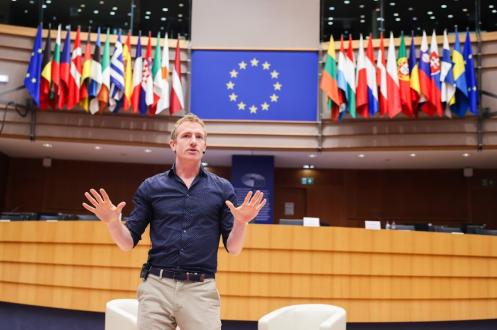
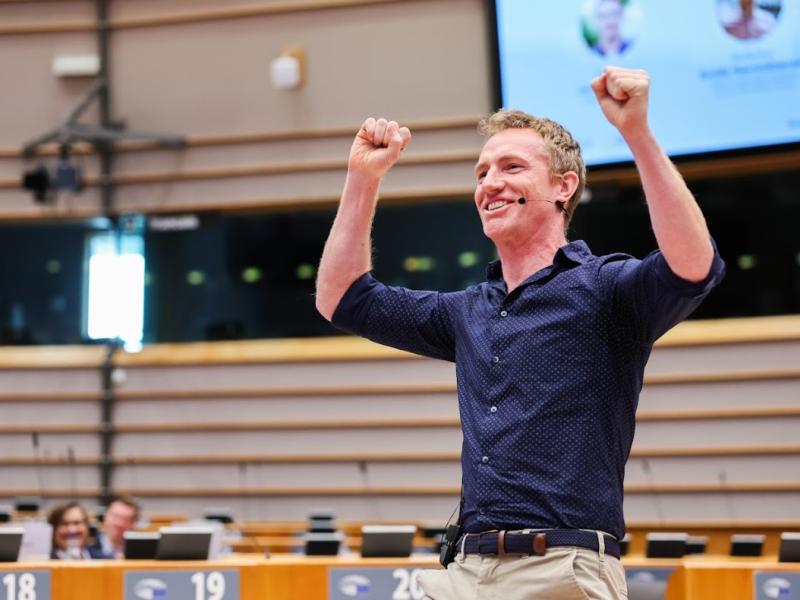
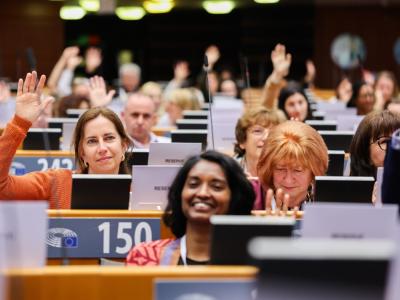
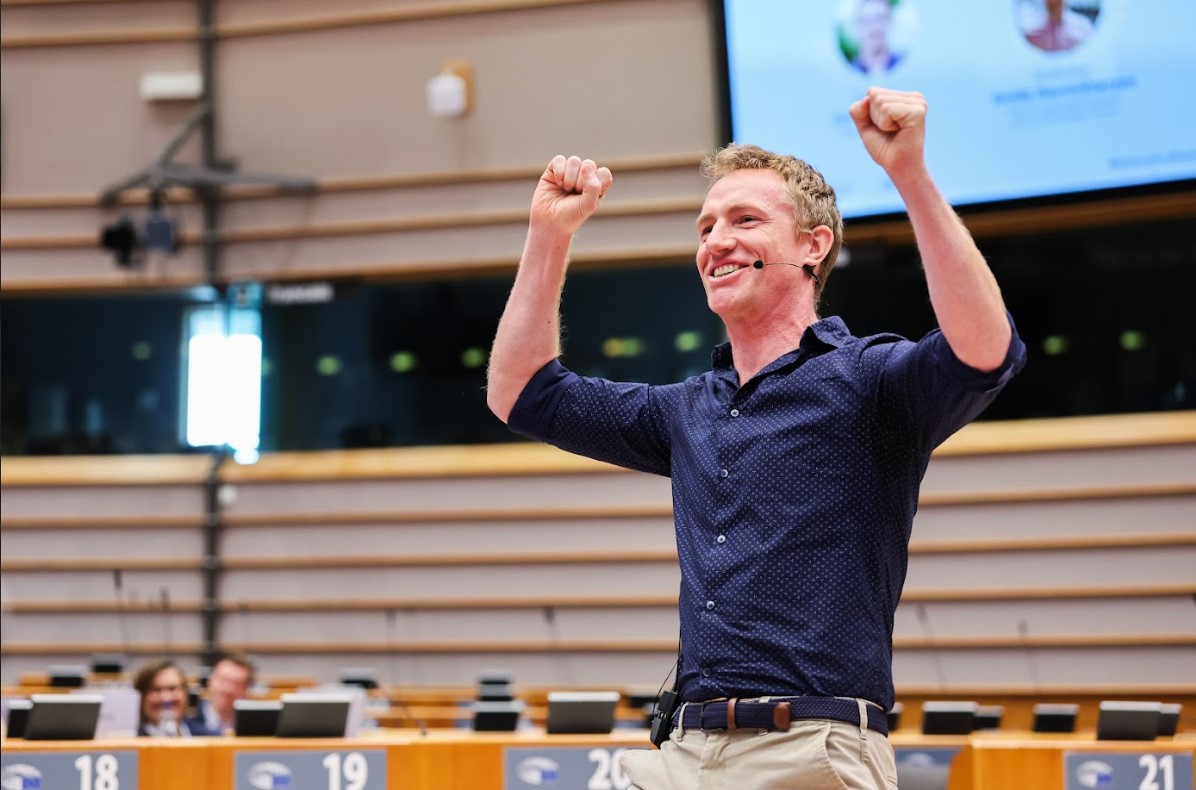
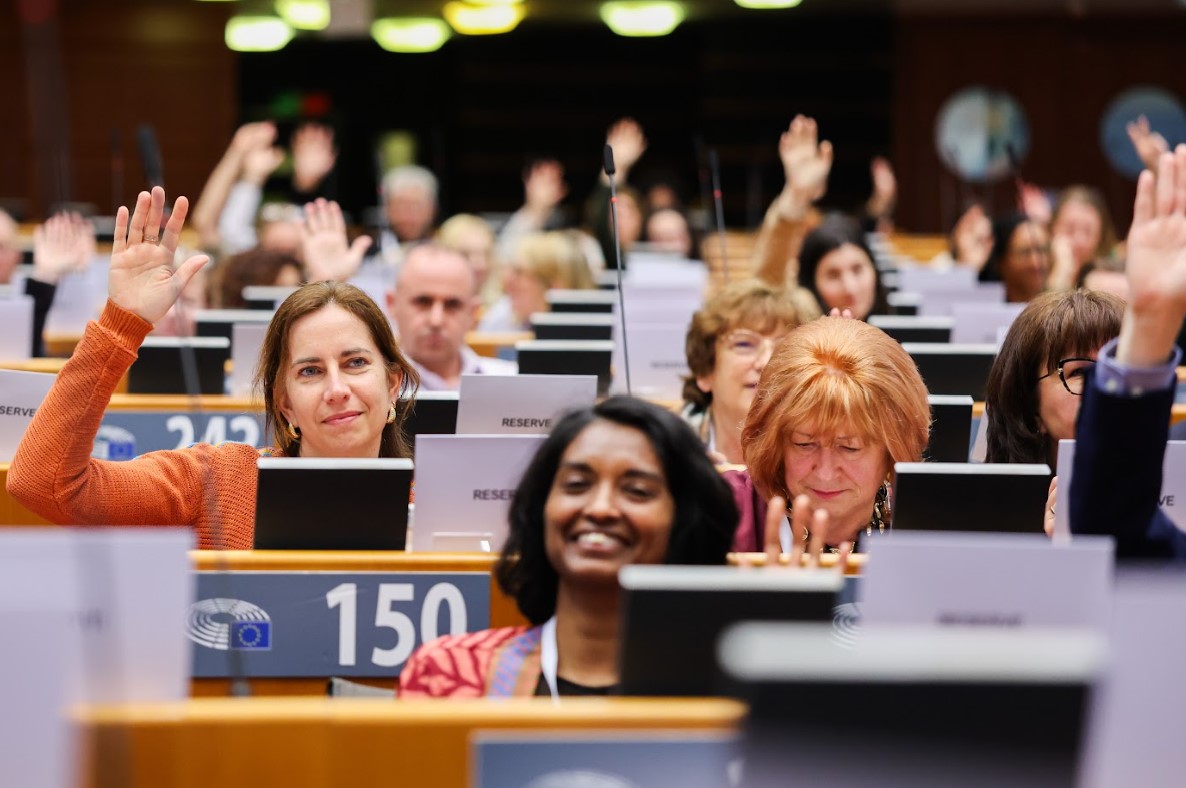
At the end of April, I had the honour of taking centre stage in the main debating chamber of the European Parliament, to deliver the opening address on “Hope and History” for the EuroClio annual conference.
This is a gathering of history teachers from across Europe, brought together in partnership with the House of European History, a museum in Brussels with the remit of holding a public space for Europe’s ever evolving story.
I chose not to sugar any pills, asking the assembled teachers how hopeful they felt in this moment, and eliciting the responses you might expect.
I have been feeling pretty conflicted about the idea of hope myself recently. My friend Ece Temelkuran thinks it is “too soft a word”, arguing that we are living in times “when we might need to act even when there is no hope.” And in a certain sense, I tend to agree. There is no hope for a gentle, easy, steady future any more, with all the ecological and political upheaval that are already underway and certain to come - but I’m not sure many people really “hope” for that anyway.
What we can hope for, I argued, is to live meaningful lives, animated by clarity, imagination, and action - a recipe for meaningful hope that I borrowed from Rebecca Solnit’s “Hope In The Dark” to structure my address.
If we see clearly, we see that the cause of our crises is the story we’re trapped within - not a fundamental and essential failure of an inevitably bad humanity.
If we dare to imagine, we look for and find the places and people who are facing up to this time and claiming collective agency to build their own alternatives to our failing systems, together. At the conference, I shared the stories of Regen Melbourne, of the Stavanger Future Panel in Norway, of the Polish youth movement crowdsourcing a “Plan For Generations”…
And if we act, we can all follow their lead and do the same.
All teachers, I think, have a key role in our communities in inspiring all three of these things. And the particular role of history is perhaps to remind us that things do change, systems do change, in truly fundamental ways - if and when we step into clarity, imagination, and action.
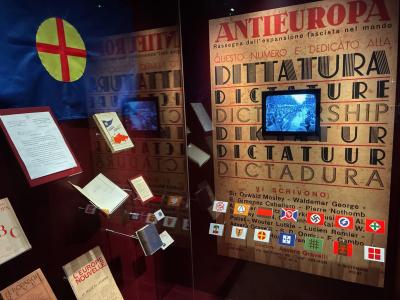
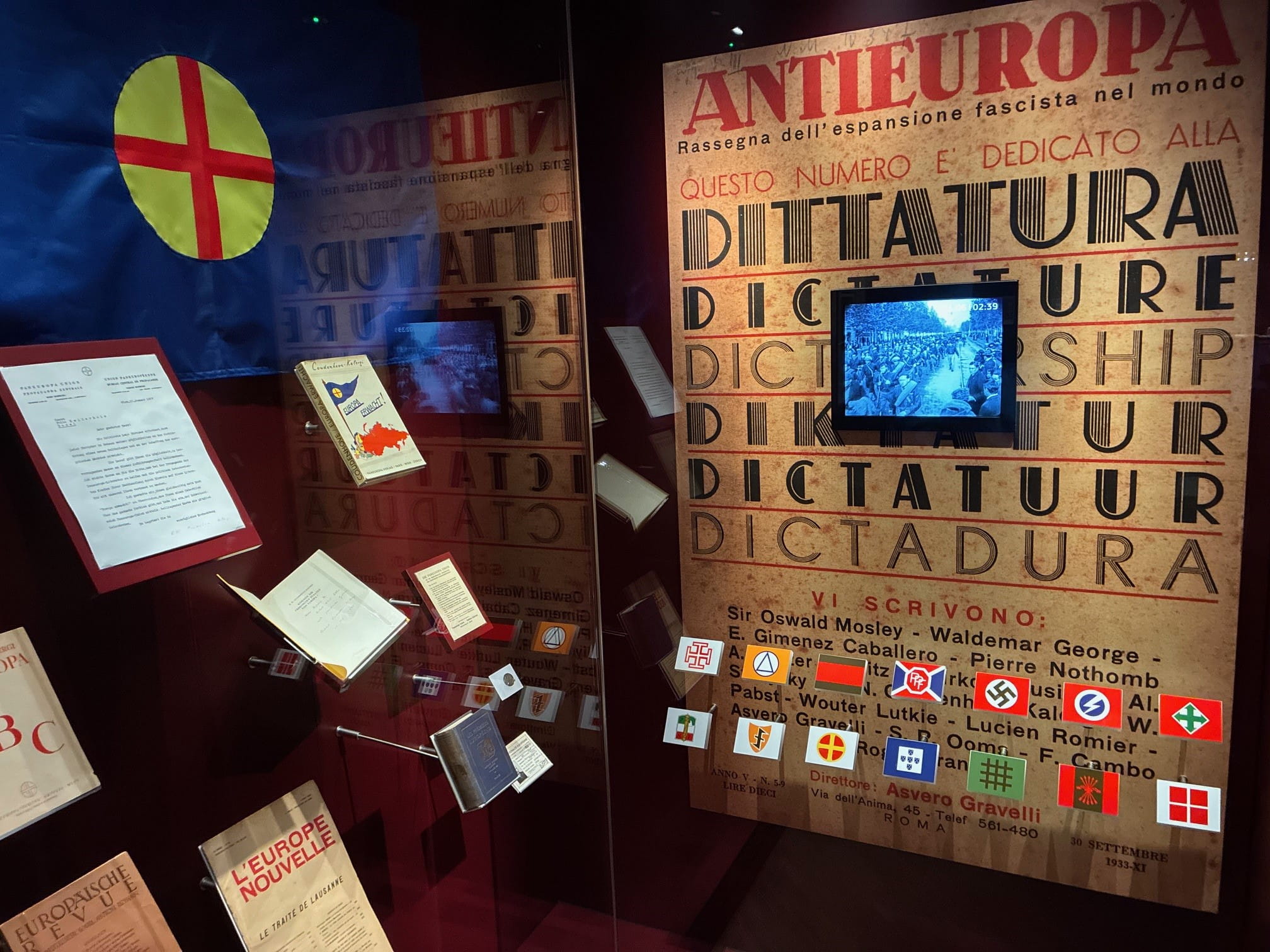
After the talk, my wonderful hosts Laurence Bragard and Guido Gerrichhauzen took me for a brief tour of the House of European History. My favourite spot in the museum? A display juxtaposing fascist literature and that of the European dreamers, both from the 1930s. It was a powerful reflection of my message, I think: proof positive of the power of clarity, imagination and action in the face of dark times; a stark reminder that the beautiful dream of Europe was born in the face of flames, not in calm and quiet.
The future is not going to be easy, and it’s not going to be tidy and controllable. Things are going to get very messy indeed.
But there can be a great deal of beauty and meaning in that messiness. And there might be even more on the other side.
The fact that we can’t know exactly what every step of the path will look and feel like must not stop us from starting to walk it.
Jon Alexander is author of the award-winning Citizens: Why The Key To Fixing Everything Is All Of Us, the co-host of the How To Save Democracy podcast, a Visiting Fellow at the Ash Center for Democratic Governance and Innovation at the Harvard Kennedy School, and the co-founder of the New Citizen Project.
Read more about the Hope Manifesto and download a copy in up to 24 languages.