Overview
A specific focus of Peripheries and Horizons is placed on Central, Eastern, and Southeastern Europe (CESEE) where cultural and political peripheralisation intersects with complex histories of empire, through different practices of socialism and communism, internationalism and nationalism, and transitions towards "democracy" and capitalism. The series also examines how “whiteness” is constructed, negotiated, and destabilised in these contexts, challenging assumptions of a homogeneous European identity.
The series considers coloniality in particular contexts of this region. Invasion, conquest, and oppression can certainly be part of colonial histories, but they are not sufficient conditions, on their own, to define a country as "colonised". Colonialism is also characterised by a specific material relation of extraction between a centre and its colonies—a relation that does not correspond in the same way to the history of these countries. This series challenges the equivalence between the historical conditions of countries in Eastern Europe, and that of colonised countries in the Global South, by embracing and making space for complexity.
These events are part of the “Postcolonial?” Public Programme co-developed by the museum with a circle of experts, practitioners, artists and educators.
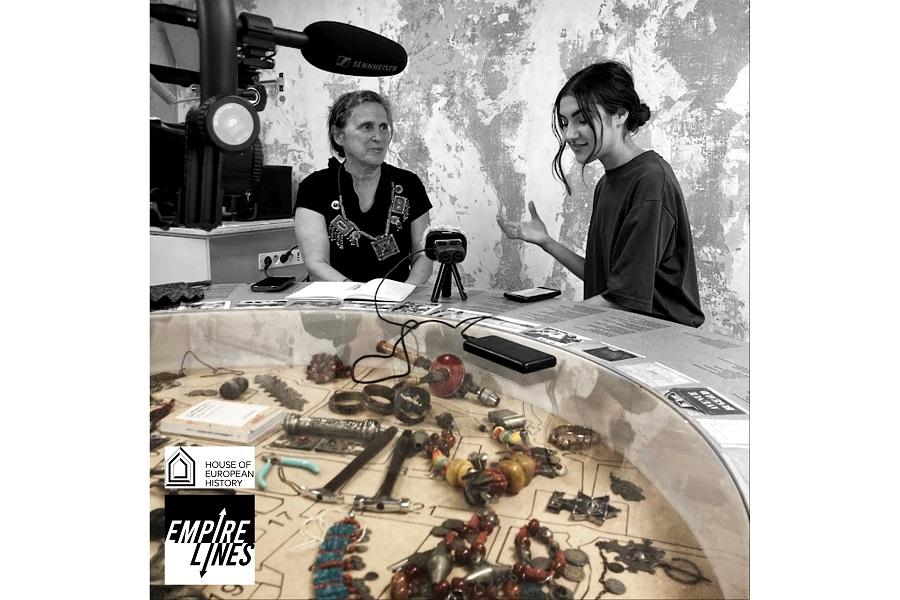
Podcast – The Jewelers of the Ummah, Ariella Aïsha Azoulay (2024, 2026)
24 September 2026
EMPIRE LINES uncovers the unexpected, often two-way, flows of empires through art. Interdisciplinary thinkers use individual artworks as artefacts of imperial exchange, revealing the how and why of the monolith 'empire'.
In this special episode, author, filmmaker, and jewellery-maker Ariella Aïsha Azoulay details shared, intertwined histories of Jewish and Muslim life in Algeria and North Africa, and how they have been fractured through French colonialism and Zionism, in their book, The Jewelers of the Ummah: A Potential History of the Jewish Muslim World (2024, 2026).
Listen on SoundCloudLink is external
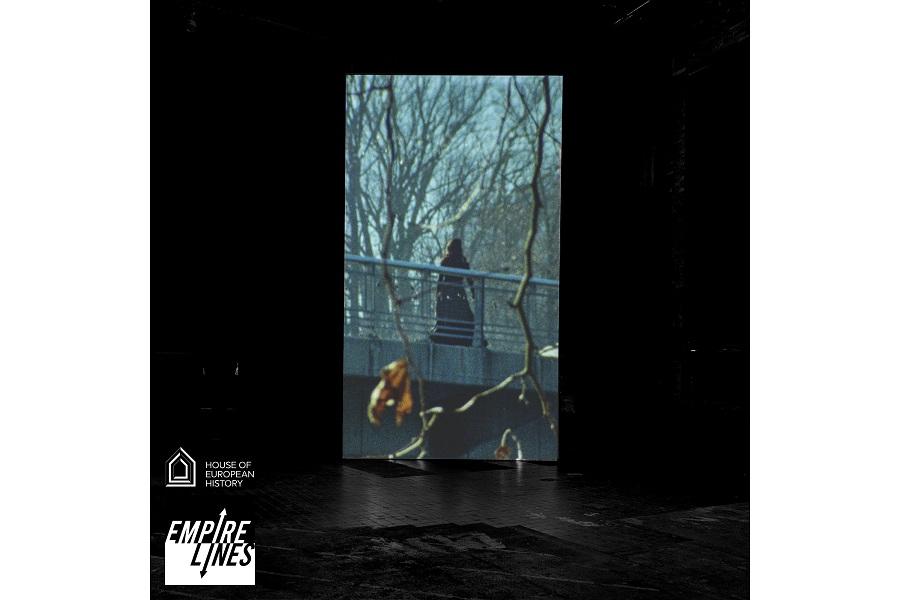
Podcast – Crossing the Blue Bridge, Selma Selman (2024, 2026)
19 November 2026
EMPIRE LINES uncovers the unexpected, often two-way, flows of empires through art. Interdisciplinary thinkers use individual artworks as artefacts of imperial exchange, revealing the how and why of the monolith ‘empire’.
In this special episode, contemporary artist Selma Selman draws on her personal history and Roma heritage to address labour, value, and marginalisation, moving between Bihać, Bosnia and Herzegovina, and Berlin in her film, Crossing the Blue Bridge (2024, 2026).
Link coming soon!
Online conversation - "East” of the “Centre-Periphery"
1 October 2026 - 19:00
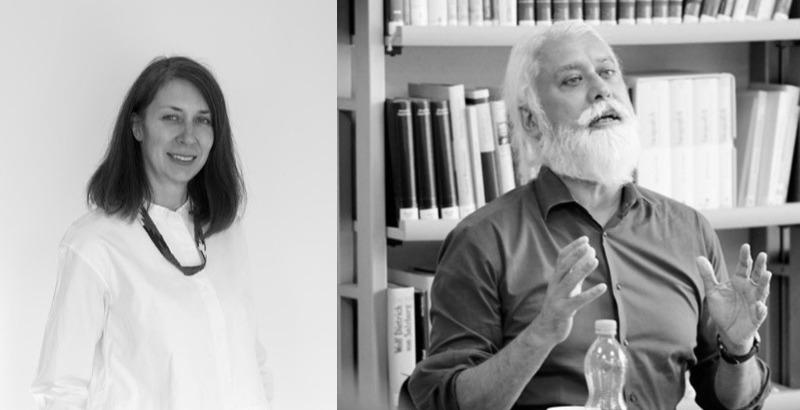
This online conversation brings together curator Nataša Petrešin-Bachelez, and Professor Harsha Ram to examine how the concept of “Easternness” can be understood in relation to Russian imperial and Eurasian contexts. The discussion explores the role of literature and aesthetics in shaping imperial imaginaries of the “East”, alongside the significance of the Caucasus as a space of cultural encounter, marginality, and geopolitical projection. It also considers the relationship between former socialist histories and postcolonial and decolonial frameworks, reflecting on how artistic and cultural practices challenge dominant narratives across Central, Eastern, and Southeastern Europe and Eurasia. Moderated by Jelena Sofronijevic (EMPIRE LINES Podcast). The conversation concludes with a screening of Mihaela Drăgan’s À la porte les sauvages! (2024).
Join online. No registration required. The link will be activated shortly before the event starts.Link is external
Online conversation - The Embroidered Threads of Coloniality: Orientalism, Cultural Appropriation and Internal Coloniality in Europe
15 October 2026 - 19:00
Event in French - Les fils brodés de la colonialité : Orientalisme, appropriation culturelle et colonialité interne en Europe
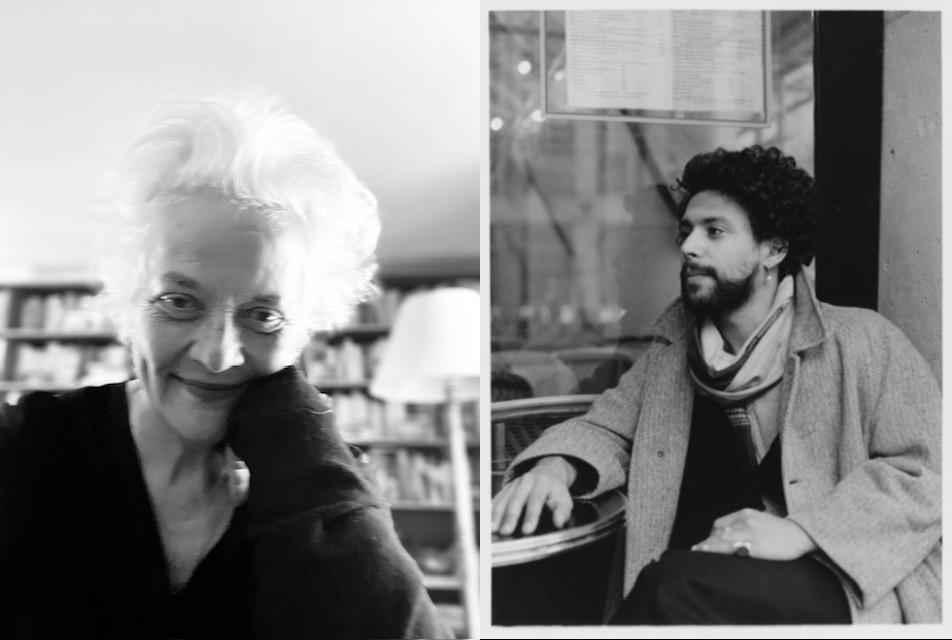
What can textiles, clothing and craft practices reveal about the power relations that run through Europe? In a dialogue between Françoise Vergès and Khémaïs Ben Lakhdar-Rezgui, this conversation will explore Orientalism, cultural appropriation and internal coloniality across different European contexts. Focusing particularly on the Balkans, Roma communities and other European peripheries, it will examine the processes of exoticisation and folklorisation through which certain groups have been constructed as Europe’s “internal others”. By tracing the circulation of motifs, embroidery and craft knowledge towards the centres of fashion, design and culture, the discussion will highlight the cultural hierarchies that continue to shape European imaginaries. Moderated by Pierre-Antoine Vettorello.
Join online. No registration required. The link will be activated shortly before the event starts.Link is external
Online conversation - Ireland and Internal Colonisation
29 October 2026- 19:00
This online conversation brings together artist Marianne Keating, curator Viviana Checchia, and playwright and activist Rosaleen McDonagh to examine how the concept of coloniality can be understood within the Irish context, with particular attention to Roma and Traveller communities. The discussion explores the intersections of ethnicity, disability, and gender in shaping experiences of marginalisation; the role of theatre and writing in challenging dominant histories and amplifying underrepresented voices; and how institutional structures reproduce structural inequalities. Adopting an intersectional, rights-based perspective, the conversation considers contemporary debates on identity, citizenship, and belonging across Europe. Moderated by Jelena Sofronijevic (EMPIRE LINES Podcast).
Join online. No registration required. The link will be activated shortly before the event starts.Link is external
Online conversation - Coloniality in Central, Eastern, and Southeastern Europe (CESEE) and Russia
12 November 2026 - 19:00
This online conversation brings together artist Karolina Uskakovych, curator Joanna Warsza, and historian and critical geographer Zoltán Ginelli to examine how the concept of coloniality can be understood through the material, cultural, and political histories of Central, Eastern, and Southeastern Europe (CESEE) and Russia. The discussion explores how artistic practices, exhibitions, and critical research engage with questions of geopolitical transformation, memory, and representation, particularly in relation to post-communist and post-socialist histories, Russian imperialism, and the war in Ukraine. Moderated by Jelena Sofronijevic (EMPIRE LINES Podcast).
Join online. No registration required. The link will be activated shortly before the event starts.Link is external
Film screening and conversation – El Shatt – A Blueprint for Utopia
20 November 2026 - 18:30 - 21:00
Venue: House of European History, Rue Belliard 135, 1000 Brussels
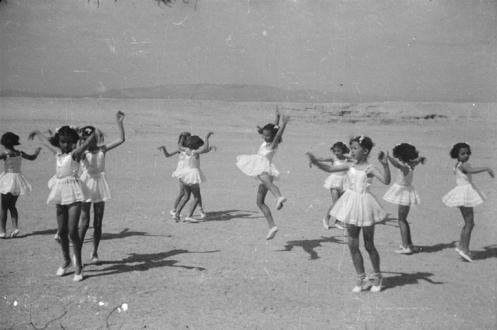
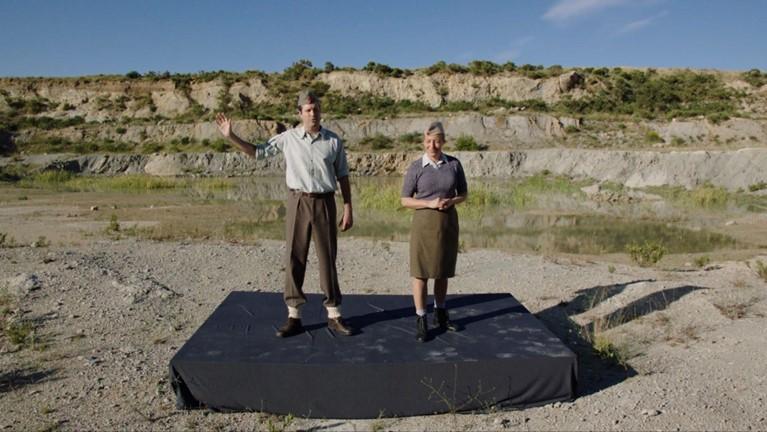
As part of the Peripheries and Horizons series, this screening of El Shatt – A Blueprint for Utopia (2023) by Ivan Ramljak explores the exile of communities from Yugoslavia to a refugee camp in northern Egypt during World War II. Situating this European displacement within British colonial spaces, the film highlights how war and ideology were experienced through imperial infrastructures, revealing the entanglements of European crises with colonial peripheries and alternative social imaginaries. The screening will be followed by a conversation with director Ivan Ramljak and art historians Maja and Reuben Fowkes, moderated by Jelena Sofronijevic (EMPIRE LINES Podcast).
Register nowLink is external
Co-curator biographies
Jelena Sofronijevic (@empirelinespodcast) is a producer, curator, writer, and researcher, working at the intersections of cultural history, politics, and the arts. Their independent curatorial projects include Invasion Ecology (2024), SEEDLINGS: Diasporic Imaginaries, with Travelling Gallery (2025), and Seeds of Hate and Hope, at the Sainsbury Centre (2025). Jelena produces EMPIRE LINES, a podcast which uncovers the unexpected flows of empires through art, supported through their role as Curator with Radical Ecology (2026-2027). They are also pursuing a practice-based PhD with Gray’s School of Art, curating exhibitions with Balkan and Yugoslavian/diasporic artists in British art collections.
Pierre-Antoine Vettorello is a PhD candidate at Sint Lucas Antwerp and the University of Antwerp in 2026. A textile and fashion practitioner, he holds a Master's degree in Fashion from the Antwerp Fashion Department (2011) and a Master's degree in Artistic Research from Sint Lucas Antwerp (2020). His research engages with textiles, fashion history, material culture, colonial archives, and artistic research methodologies. He has taught research methodology at the Royal Academy of Fine Arts in Brussels and currently supervises master's students in academic writing at Istituto Marangoni Paris. During the 2025-2026 Michaelmas term, he was a visiting doctoral researcher at Wolfson College, University of Oxford, where he conducted research at the Pitt Rivers Museum. Since 2023, he has worked as an action researcher on the FWO-funded Crafting Futures project, examining the transmission and value of craft practices in Flanders. In 2025, he served on the executive board of the Research Collective for Decoloniality and Fashion and is the editor of The Yarn, a biannual publication exploring colonial legacies in fashion museums and education.
Banner image: Still from El Shatt – A Blueprint for Utopia (2023) courtesy of Ivan Ramljak.