Events descriptions
Postcolonial? opening - evening event - 17 April 2026
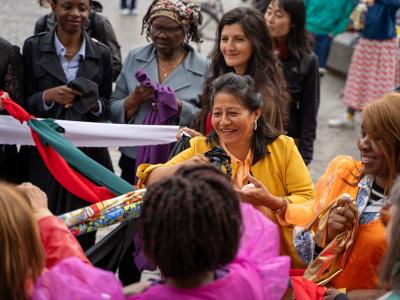
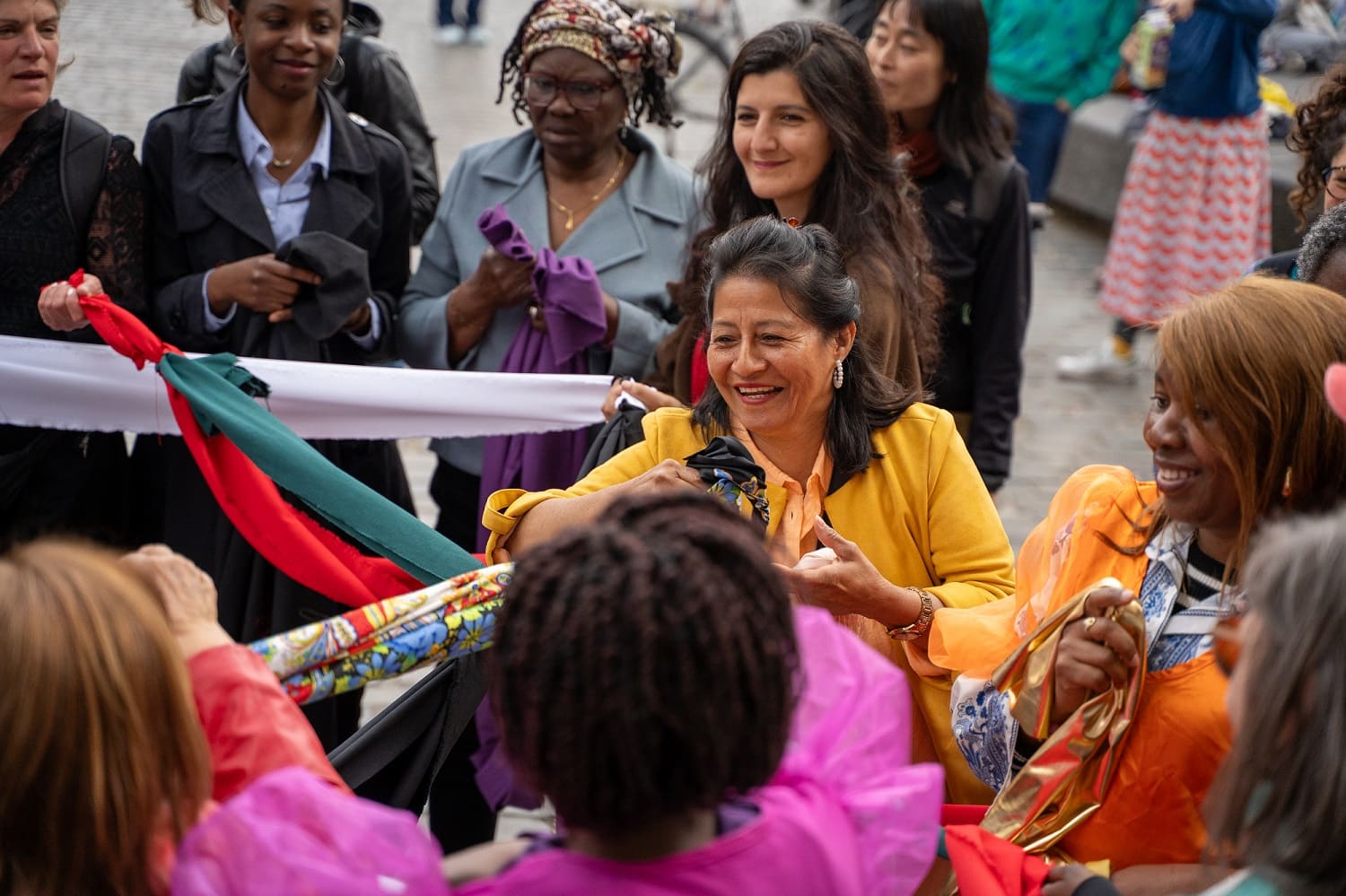
The opening of Postcolonial? will start with an invitation-only reception, as a gesture of acknowledgment and thanks to partners. This will be followed by the official public opening, including two live performances by Afro-descendant women artists, a hands-on workshop led by a specialist in traditional Indian block printing, and four guided tours of the exhibition conducted by the curators. The evening will be accompanied by a thematic musical programme.
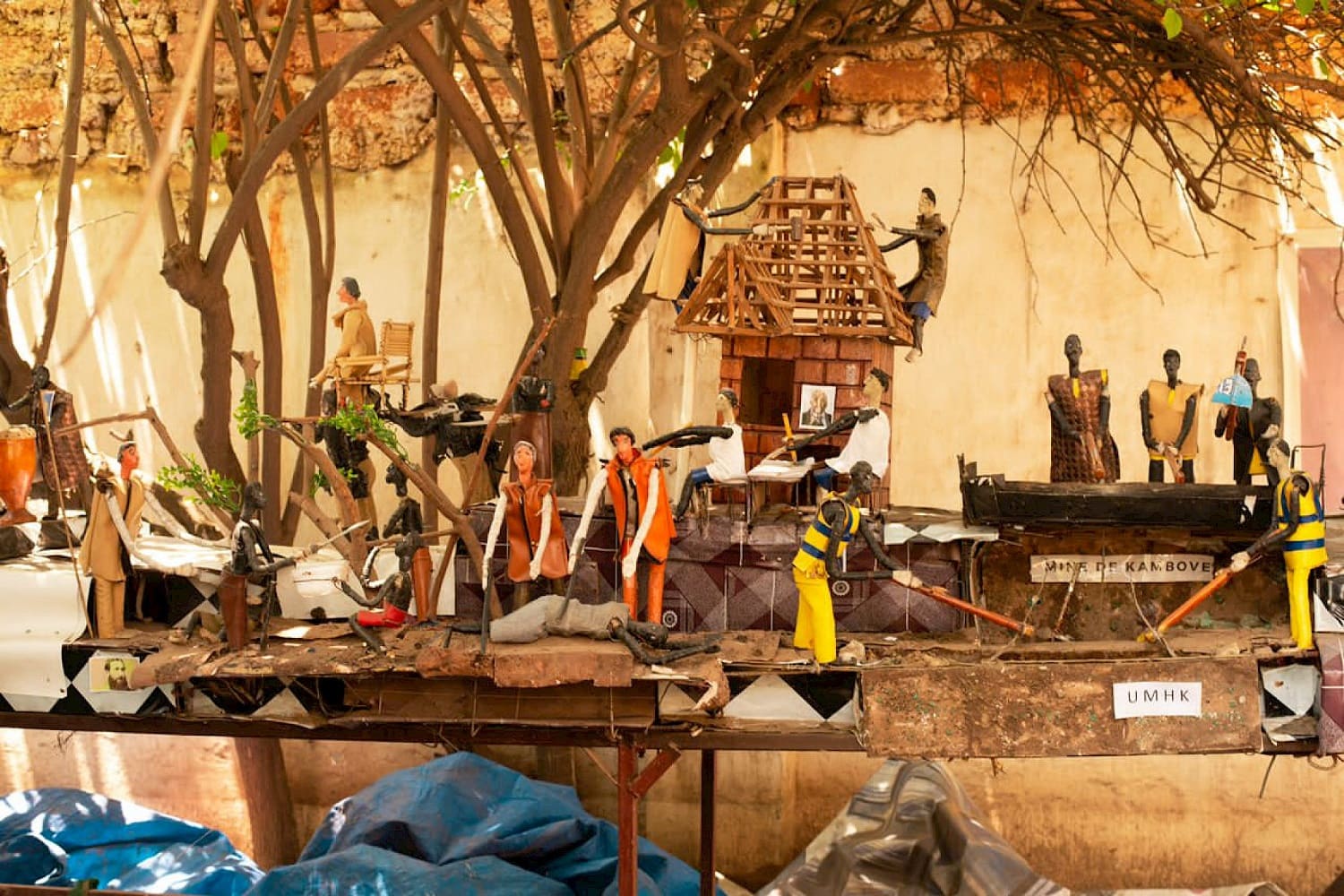
Living history: puppet workshop with Justice K Dibwe
Workshops 30 May & 6 June 2026, language: FR
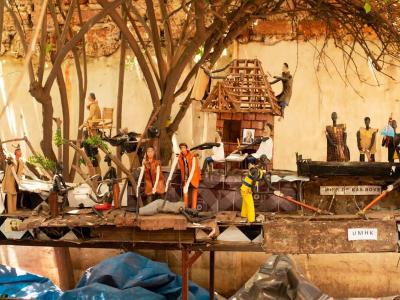
Discover the Postcolonial? exhibition together with Congolese artist Justice Kasongo Dibwe and the museum’s educators. Participants will learn about stories of anti-colonial resistance and the struggle for independence through the art of Justice - a mobile installation of mechanical puppets narrating the colonial history of Congo. They will be able to create their own puppets and create a collective story. Children are welcome.
After borders: on coloniality, patriarchy and capital
Collective performance, 20 and 21 June 2026
This two-day initiative with Maria Galindo and La Candidate sans Papiers is an international gathering of working women with backgrounds in formerly colonised countries to collectively create a dramaturgy of migration based on their situated, lived perspectives. Active citizens and associations will come together,to take part in workshops, discussions, and public talks. The event will be open to the public and culminate in a public performative assembly.
Rani of Jhansi: Heroism, Gender, and Resistance in Colonial India
Curatorial talk and lithography workshop - 26 September 2026
Learn how artistic practices in colonial India became tools of resistance, and cultural self-assertion. Through lithography, the event examines the intersections of gender and anti-colonial struggle during the First War of Independence (1857). Participants are invited to engage with art as a visual language of resistance, and to create contemporary allegories addressing current struggles such as migration, climate justice, gender equality.
Partition of India: Borders, Memory, and Displacement
Participatory workshop - 26 September 2026
Through a combination of lecture, film screening about the partition of India (1947), we explore how political decisions imposed by colonial powers produced mass displacement, trauma, and fractured identities that continue to shape postcolonial societies today. Personal narratives, cultural memory, and lived experiences invite participants to reflect on migration, loss, and belonging, drawing connections between historical partitions and contemporary border regimes.
Fischi per Fiaschi: Practices of (Un)Learning
Hands-on workshop & talk - 10 October 2026
Fischi per Fiaschi - developed in collaboration with Black History Month Florence and The Recovery Plan- is an experimental participatory format that invites audiences to engage critically. Fischi per Fiaschi creates a space to question dominant representations and reflect on the archival politics within postcolonial Blackness. Blending dialogue, music, and poetry, the event guides participants through an embodied listening experience while interrogating what it means to archive, what gets archived, and how archival practices can both reproduce and resist colonial forms of erasure.
Peripheries and Horizons
Seminar & podcast - 24 September - 20 November 2026
This online/onsite seminar series brings together scholars, artists and filmmakers, and activists to explore how decolonial approaches travel, what they illuminate, and where they encounter friction when applied within Europe itself—particularly in regions often positioned as its margins.
A specific focus is placed on Central, Eastern and Southeastern Europe where cultural and political peripheralisation intersect with complex histories of empire, through different practices of socialism and communism, internationalism and nationalism, and transitions towards 'democracy' and capitalism. The series examines how “whiteness” is constructed, negotiated, and destabilised in these contexts, challenging assumptions of a homogeneous European identity.
Food stories
Hands-on workshop - 12 December 2026, language: FR
Taste the foods that have shaped our cultures and discover the stories behind them. Many of the ingredients we use every day, like sugar, cocoa, coffee, spices, potatoes, and tomatoes have travelled across continents and centuries. through complex histories of trade, migration, empire and exchange. By tracing the paths of these foods from their origin to our kitchens today, we can begin to understand how colonial expansion reshaped global agriculture, economies and tastes.