- Date
- 2 December 2026, 09:00-11:30 (CET)
- Location
- House of European History, rue Belliard/straat 135, 1000 Brussels, Belgium
How can museums and education help societies confront the continuing effects of slavery and colonialism?
Marking the International Day for the Abolition of Slavery, this event connects historical remembrance with current discussions of structural racism.
Participants will consider how museums, education and historical knowledge can support more inclusive narratives and practices.
The event has been co-organised by the UN Human Rights Representation Office to the European Union and DG JUST, with support and interventions from the European Commission Anti-Racism Coordination Team, UNESCO, European External Action Service, European Commission Anti-Racism Coordination Team, academia and civil society.
The programme will draw on the House of European History exhibition Postcolonial? and the HistoriCall learning module What Is Racism? as reference points.
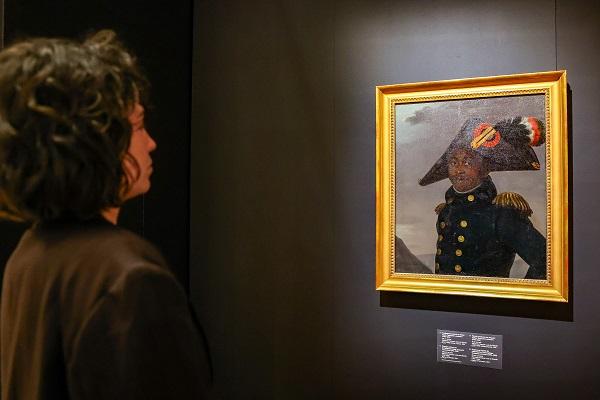
Image right: Posthumous portrait of Haitian leader Toussaint Louverture as featured in the Postcolonial? exhibition, 1804, Comte Alexandre François Louis de Girardin (1767-1848).
Practical information
- Event language: English, French and Spanish, with simultaneous interpretation
- Cost: free
- Registration is mandatory via the following button:
Programme
09:00-09:45: Registration and welcome coffee
09:45-10:10: Opening remarks
Speakers:
- Constanze Itzel, Museum Director, House of European History
- Ana Carla Pereira, Director for Equality, European Commission
- Ellis Mathews, Head of the EEAS Human Rights Division
- Christina Meinecke, Representative of the United Nations High Commissioner for Human Rights to the European Union
- Gaynel Curry, Chair of the Permanent Forum People of African Descent
10:10-10:30: Keynote - Why remembrance matters for building more equal societies?
Speaker: François d’Adesky (Association Métis de Belgique / Metissen van België) – focusing on the children of Belgian colonial métissage
10:30-11:30: Plenary - From historical legacies to structural racism today: what lessons for Europe? Discussion on slavery and colonial legacies, remembrance, structural racism, anti-racism policies, international cooperation, and the role of museums and cultural institutions. Moderated by Guido Gerrichhauzen, Head of Learning, House of European History.
- Sara Hamood, Chief of the Anti-Racial Discrimination Section (OHCHR) in Geneva
- Dr Nonso Obikili, UNESCO/EU-funded Routes of Enslaved Peoples project
- Dr Fredrik Thomasson, Uppsala University, specialist in Scandinavian colonial history