In the late 1800s and early 1900s, affordable lithographic prints and bazaar images played a big role in shaping how people remembered historical heroes. As these images spread across India, they helped turn real figures into lasting cultural icons.
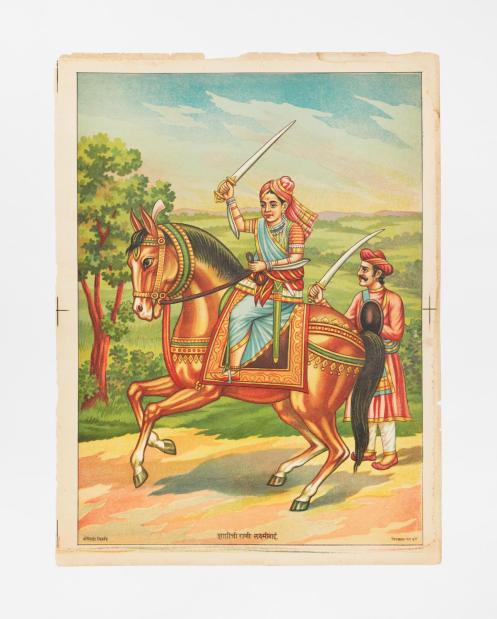
The lithograph of Rani Lakshmi Bai of Jhansi shows her as a brave warrior queen.
She is on horseback, holding a sword, and wearing royal clothes, which highlights her courage and determination. A figure beside her horse emphasizes her leadership, and the background suggests the battlefield and the important events of the First War of Independence in 1857.
Rani Lakshmi Bai strongly opposed British rule and died fighting at Gwalior in 1858. Thanks to widely shared prints, she became a symbol of resistance to colonial rule and showed the strength of women in the fight for independence.
This event invites young adults to explore how popular art turned history into images of heroism. It presents Rani Lakshmi Bai as both a queen and a symbol of bravery, sacrifice, and national pride. It is part of the public programme for the exhibition Postcolonial?